

Keywords: contra entry, journal entry, record keeping, double entry
Written By: Sultan Coker Photo By: Creativity
As a business owner, one of the essential aspects of your operations is proper financial record-keeping. You need to keep track of your finances to make informed decisions, comply with tax regulations, and attract investors. One of the fundamental tools used in financial record-keeping is a journal entry. In this article, we will take an in-depth look at what a journal entry is, the types of accounts used in journal entries, why journal entries are necessary, and how to record them accurately.
What is a Journal Entry?
A journal entry is a record of a business transaction in chronological order. It documents the financial impact of a transaction on a company’s accounts. A journal entry typically includes the date of the transaction, a description of the transaction, the accounts affected, and the amount of money involved. Journal entries provide a detailed trail of a company’s financial transactions, making it easier to analyze the financial health of the business.
What Types of Accounts are Used in Journal Entries?
Journal entries use two types of accounts: Debit and Credit. Debit accounts are those that show an increase in assets, expenses, or losses, while credit accounts are those that show an increase in liabilities, equity, or income. In a journal entry, the debit and credit accounts should always balance. This is because the double-entry accounting system is used to ensure that every transaction has an equal effect on at least two accounts.
Why are Journal Entries Necessary?
Journal entries are necessary for accurate financial record-keeping. They provide a detailed record of every financial transaction in a business. This record ensures that the company’s financial statements are accurate and reliable. Journal entries also help with financial analysis and decision-making, as they provide a trail of the company’s financial history. Additionally, they aid in complying with tax regulations and help to identify errors or fraudulent activities.
Importance of Accurate Record-keeping for any Businesses
Accurate record-keeping is critical for any businesses to succeed. It helps in managing cash flow, making informed decisions, and attracting investors. Proper financial record-keeping also ensures compliance with tax regulations and helps avoid costly penalties. Keeping an accurate record of financial transactions is not only essential for businesses but also mandatory for tax purposes. Without proper record-keeping, a business owner may be unable to determine if the business is profitable or not.
Types of Transactions that Require Journal Entries
Journal entries are necessary for all financial transactions that affect a company’s accounts. Such transactions include purchases, sales, loans, payments, depreciation, and any other activity that affects the company’s financial position. For example, when a company purchases an asset, it records the transaction in a journal entry. The entry will include the date of the transaction, a description of the asset, the accounts affected, and the amount involved. A journal entry includes the following components:
- Date: The date on which the transaction occurred.
- Account Title: The name of the account that was affected by the transaction.
- Description: A brief description of the transaction.
- Debit: The amount of money debited to the account.
- Credit: The amount of money credited to the account.

Understanding the Double-Entry Accounting System: How do Journal Entries Fit into the Double-Entry Accounting System?
Journal entries are essential in the double-entry accounting system. This system ensures that every transaction has an equal effect on at least two accounts. In a journal entry, one account is debited, and another account is credited. The total amount of the debits must always equal the total amount of the credits. The double-entry accounting system ensures that the company’s financial records are accurate and reliable, as every transaction is recorded in at least two accounts.
The Role of the General Ledger in Journal Entries
A general ledger is a record of all the accounts used by a business. When a journal entry is recorded, it is posted to the relevant accounts in the general ledger. The general ledger provides a detailed record of a company’s financial transactions, making it easier to prepare financial statements and analyze the financial health of the business. There are several common journal entries that businesses need to make, including:
Sales transactions: When a company sells goods or services, it records the transaction in a journal entry. The entry will include the date of the sale, a description of the goods or services, the accounts affected, and the amount of the sale.
Expense transactions: When a company incurs an expense, it records the transaction in a journal entry. The entry will include the date of the expense, a description of the expense, the accounts affected, and the amount of the expense.
Asset purchases: When a company purchases an asset, it records the transaction in a journal entry. The entry will include the date of the purchase, a description of the asset, the accounts affected, and the amount of the purchase.
Loan payments: When a company makes a loan payment, it records the transaction in a journal entry. The entry will include the date of the payment, a description of the loan, the accounts affected, and the amount of the payment.
Importance of Proper Documentation and Supporting Documents for Journal Entries
Proper documentation and supporting documents are essential when recording journal entries. It is crucial to keep accurate records of all financial transactions, including invoices, receipts, and bank statements. This documentation provides evidence of the transaction and ensures that the journal entry is accurate and reliable. Proper documentation also helps in complying with tax regulations and avoiding costly penalties. Here are some examples of journal entries for sales transactions, expense transactions, asset purchases, and loan repayments:
Scenario 1
A business sold $2,000 worth of goods to a customer on March 1st. The journal entry records the increase to Accounts Receivable and the increase to Sales Revenue.

Scenario 2
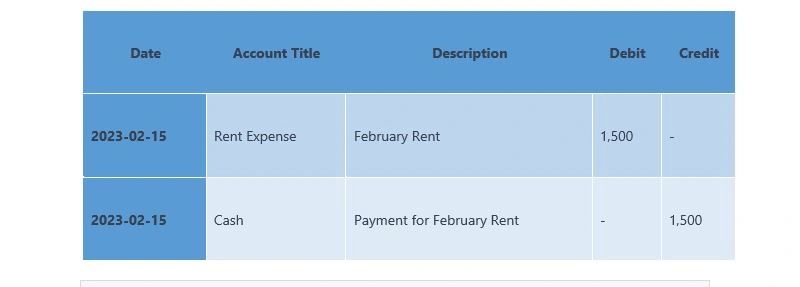
The business paid $1,500 in rent for the month of February. The journal entry records the increase to Rent Expense and the decrease to Cash.
Scenario 3
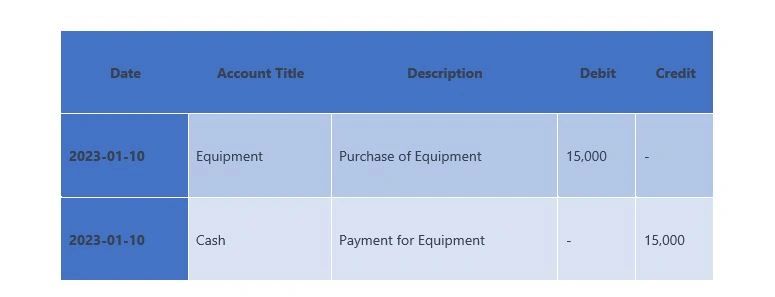
The business purchased a piece of equipment for $15,000 on January 10th. The journal entry records the increase to Equipment and the decrease to Cash.
Scenario 4
The business made a payment of $1,050 on a loan on April 1st. The journal entry records the decrease to Loan Payable, the increase to Interest Expense, and the decrease to Cash.

The Impact of Journal Entries on Financial Statements
Journal entries have a significant impact on a company’s financial statements, including the balance sheet, income statement, and statement of cash flows. The journal entries affect the balances in the accounts, which are used to prepare the financial statements. Accurate journal entries ensure that the financial statements are reliable and provide an accurate picture of the company’s financial health.
Journal entries are used in adjusting entries and closing entries at the end of an accounting period. Adjusting entries are made to ensure that the financial statements reflect the company’s current financial position. Closing entries are made to close out temporary accounts and transfer their balances to the permanent accounts. Accurate journal entries ensure that adjusting entries and closing entries are made correctly and that the financial statements are accurate.
Common Errors to Avoid in Journal Entries
There are several common errors that businesses should avoid when recording journal entries, including:
- Recording the wrong amount
- Recording the transaction in the wrong account
- Recording the transaction on the wrong date
- Recording the transaction twice
- Not balancing the debits and credits correctly.
How to Record a Journal Entry in a Manual Accounting System
To record a journal entry in a manual accounting system, follow these steps:
- Determine the accounts that will be affected by the transaction.
- Determine whether each account will be debited or credited.
- Record the date of the transaction.
- Write a brief description of the transaction.
- Record the amount of the transaction in the appropriate column for each account.
- Balance the debits and credits to ensure that they are equal.
How to Record a Journal Entry in Accounting Software
To record a journal entry in an accounting software, the process is much simpler. Most accounting software, such as QuickBooks, will have a designated area for recording journal entries. The user can simply enter the date, account titles, description, debit, and credit amounts into the designated fields. The software will automatically ensure that the journal entry is balanced, and will post the entry to the appropriate accounts in the general ledger.
Once a journal entry has been recorded, the next step is to post the entry to the appropriate accounts in the general ledger. Posting is the process of transferring the debit and credit amounts from the journal entry to the corresponding accounts in the general ledger. The general ledger is the central repository of all accounts used by a business. It is where all transactions are recorded and summarized. Each account in the general ledger has its own page, where all transactions related to that account are recorded.
Posting to the ledger: What happens after journal entries are recorded?
Posting a journal entry to the general ledger involves finding the appropriate accounts and entering the debit and credit amounts. The entry is usually posted to the ledger immediately after it is recorded in the journal. However, in some cases, the journal entry may need to be held until the end of the accounting period in order to be posted with other entries in a batch.
It is important to record journal entries on a timely basis, preferably daily or weekly. This ensures that financial statements can be prepared in a timely manner and that errors can be caught and corrected quickly. It also ensures that transactions are properly recorded and that the business has an accurate picture of its financial position at all times.
Business owners should ensure that their bookkeeping and accounting processes are efficient and accurate to avoid costly mistakes. Here are some tips to help business owners ensure accurate and efficient journal entry recording:
- Keep accurate and detailed records of all financial transactions. This includes invoices, receipts, and other supporting documents.
- Use a bookkeeping system that is appropriate for the size and complexity of the business. This could be a simple spreadsheet or a more sophisticated accounting software.
- Develop a chart of accounts that is tailored to the specific needs of the business. This will help ensure that transactions are properly categorized and recorded.
- Train employees on how to properly record transactions and ensure that all journal entries are reviewed and approved by a supervisor before being posted to the general ledger.
- Reconcile bank and credit card statements on a monthly basis to ensure that all transactions have been properly recorded and that there are no errors or discrepancies.
In conclusion, journal entries are a fundamental aspect of the accounting process. They provide an accurate record of all financial transactions and are essential for preparing financial statements and analyzing the financial health of a business. Business owners must understand the importance of accurate record-keeping and ensure that their journal entries are properly recorded, posted, and reconciled on a timely basis. By doing so, they can avoid costly mistakes and ensure the long-term success of their business.
Check out our Homepage